
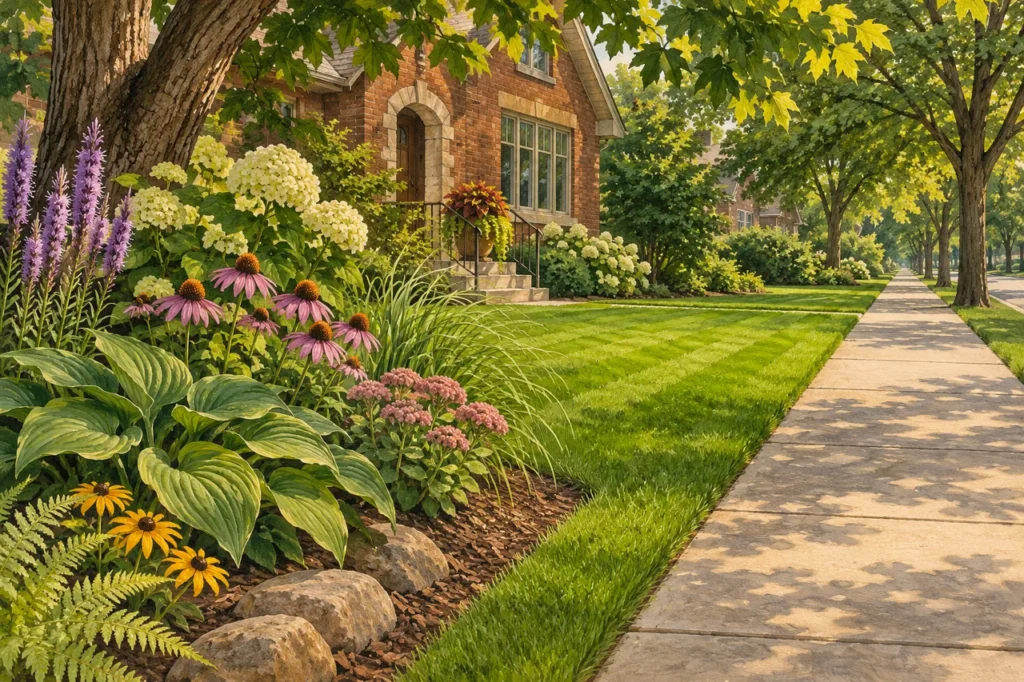
Sidewalk edging recovers the line where grass meets concrete. On a well-established Mankato boulevard, turf can creep several inches over the slab. From above, the sidewalk looks narrower than it is. Running a mower along the top leaves that hidden strip in place.
Find the actual edge
Look at the end of the walk or a joint where you can see the slab clearly. Follow that line by eye. If the grass curves inward while the concrete continues straight, growth has probably covered part of the surface.
Take two pictures before requesting work. A long view shows the length of the job. A closer picture across the edge shows whether the crew will maintain a narrow line or uncover a thicker band of rooted turf.
Separate edging from trimming
A string trimmer shortens grass beside posts, fences and tight corners. Sidewalk edging defines the vertical boundary beside pavement. The two tasks often happen during the same visit, but a first cleanup can take longer than maintaining an existing edge.
For example, a contractor may need to lift loose strips from a walk that hasn’t been edged in several seasons. Ask whether collecting that material and clearing the pavement are part of the estimate. On a corner lot, check the public-facing strip along each street, too. That question also helps you compare recurring maintenance prices.
Identify anything under the grass
Mark irrigation heads, low-voltage lighting and known shallow lines before work starts. Point out cracked corners or heaved slabs. Edging can reveal a buried boundary, but it won’t repair uneven concrete or fix water that ponds across the walk.
If the property includes curbs, steps or a shared entrance, specify which lengths need attention. Send Woodfellas those details when requesting hard surface edging. An accurate route makes it easier to agree on the finished line and the cleanup afterward.