
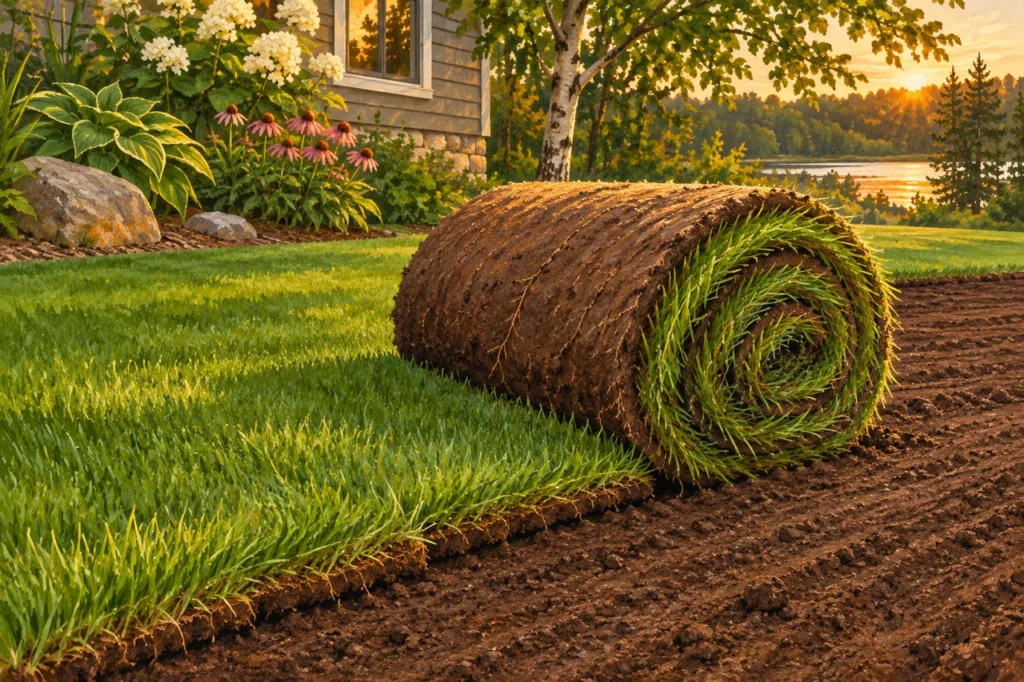
Choosing sod or seed starts with what the lawn will need to do. A bare slope beside a new driveway raises different questions than a level backyard where you can keep people off the grass. Both options depend on good soil preparation and a realistic plan for watering.
Decide how soon the soil needs cover
Sod gives bare soil an immediate cover. That can matter on a slope where rain would otherwise carry soil downhill. However, a green surface on installation day still needs time to root before it can handle regular foot traffic.
Seed generally costs less up front and offers more choice of grass varieties. It also leaves the surface exposed longer. Consider how you will protect the area from pets, shortcuts and runoff while seedlings fill in.
Compare the site, not just the price
Check how many hours of sunlight reach the area. A spot that looks bright in May may sit in shade once nearby trees leaf out. Ask which grass varieties suit that light, the site’s drainage and your expected use.
Then check the soil surface. A compacted strip left by construction equipment can limit either option. If water pools after rain, resolve the cause before placing sod or seed. A new lawn won’t change the direction of runoff by itself.
Plan care before delivery or seeding
Figure out who will water, how far the hose reaches and how you will check for missed corners. Sod seams and seed near pavement can dry differently from the middle. Ask the installer what to look for as roots begin to establish.
Review the University of Minnesota’s seeding and sodding guide. For a new lawn estimate, share the sunlight, slope, approximate area and the date you hope to use the yard. Those details help us compare sod or seed for your property.