
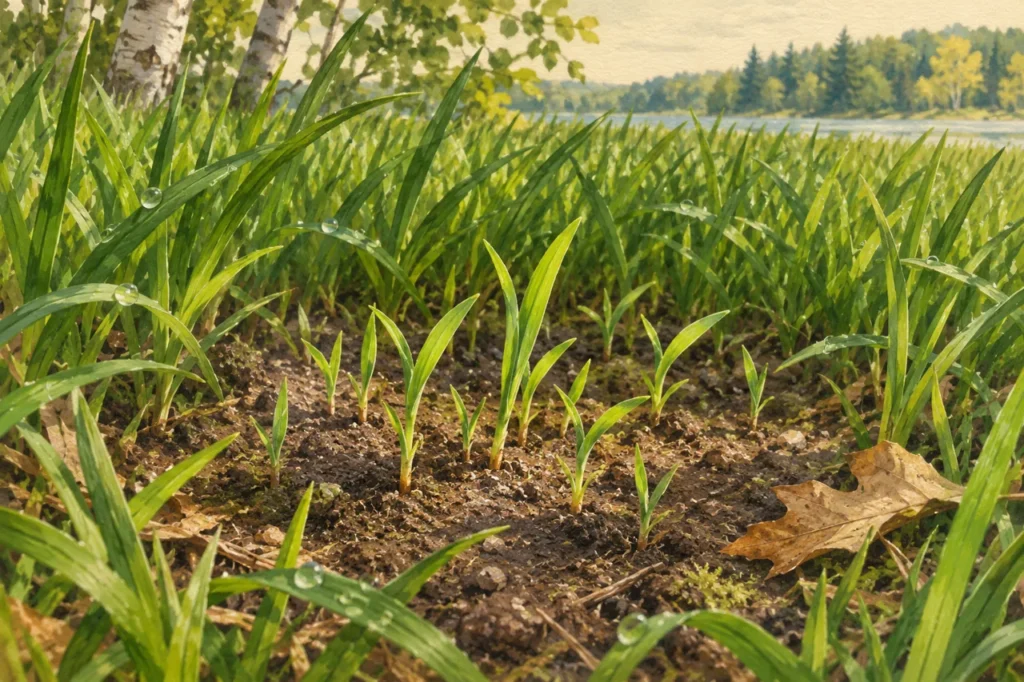
Overseeding thin lawns works best when you know why the grass disappeared. A path worn by daily foot traffic presents a different problem from a shady patch under a growing maple. Adding seed without changing the conditions can leave the same bare spots next year.
Map the thin areas
Walk the lawn after a normal rain. Note places that hold water, compacted shortcuts and sections that dry faster than the rest. Then check sunlight at several times of day. One patch may get morning light and spend the afternoon under a dense canopy.
Compare each spot with healthy grass nearby. Does the healthy area receive less traffic or more water? If a gate channels every trip across the same strip, a stepping path may be a better long-term answer there than another bag of seed.
Give seed a place to land
Seed needs contact with soil. A heavy mat of old growth can leave it suspended above the surface. Ask how the site will be prepared and which seed mix suits the light and use you observed.
Late summer offers a useful window for cool-season turf in Minnesota. The exact timing depends on weather, seed choice and your ability to keep the surface moist. Check any recent weed-control treatment for a seeding restriction before scheduling the work.
Protect the first few weeks
Plan a temporary route around the area and make sure your hose can reach its farthest corner. Watch the edges beside pavement, where moisture may disappear quickly. As seedlings develop, follow the installer’s guidance for adjusting watering and the first cut.
The University of Minnesota explains when to seed a Minnesota lawn. When you ask about overseeding thin lawns, send photos before and after rain and describe the traffic. That helps distinguish a simple thin patch from a site that needs preparation first.