
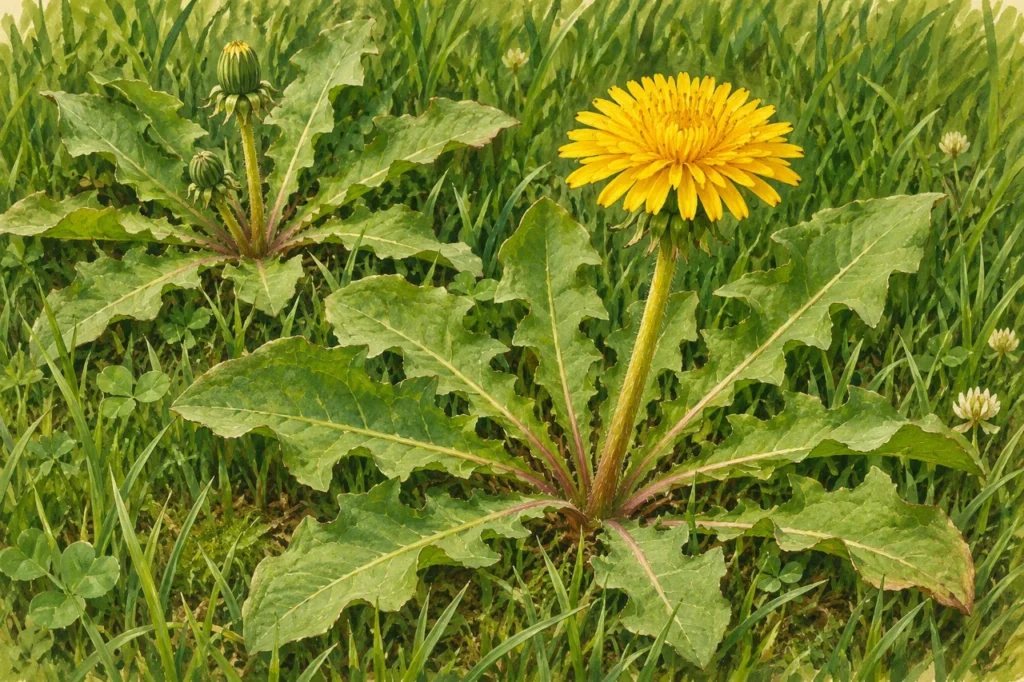
To identify lawn weeds, get closer than the view from the kitchen window. A yellow flower, a pale patch or a spreading grass at the curb can each suggest several possibilities. A clear identification gives you a better basis for deciding whether any treatment makes sense.
Take three useful photos
First, photograph the patch in the lawn so its setting is visible. Next, take a close view of the leaves where they meet the stem or crown. Finally, photograph a flower or seed head if one is present. Place a ruler beside it for scale.
Write down when the plant appeared. A grassy patch that shows up beside hot pavement in summer raises different questions from a broadleaf rosette that survived winter. Keep those details with the photos instead of relying on memory later.
Check one familiar example
A common dandelion has toothed leaves in a low rosette. Its yellow flower sits on a leafless, hollow stalk. A yellow flower on a branching stem points you toward a different identification. The University of Minnesota dandelion guide shows the features to compare.
Avoid choosing a product from flower color alone. The timing, type of weed, surrounding grass and any nearby planting beds can all influence the options. If the lawn will be seeded soon, tell the person assessing the site.
Look at the growing conditions
Thin turf gives unwanted plants room. Check whether the patch receives heavy foot traffic, dries out beside pavement or sits under dense shade. Fixing that underlying condition may make a longer-lasting difference than treating the same spot every year.
Send the photos when asking about lawn weed control. Include the location, recent treatments and whether you want to overseed. A specific description helps the crew identify lawn weeds and discuss a plan for the turf around them.