
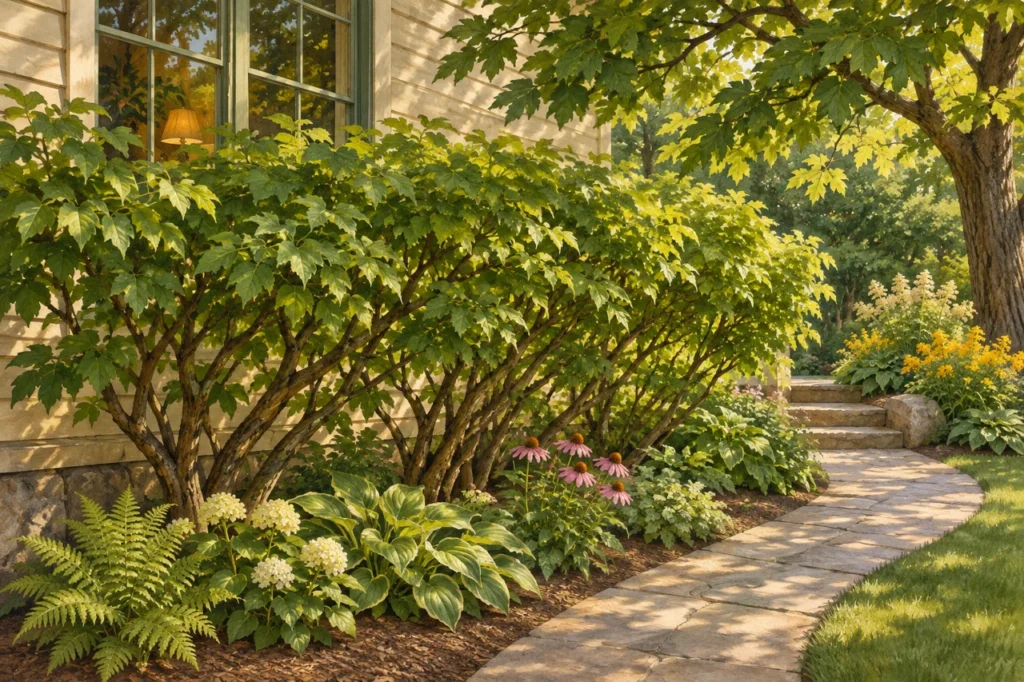
Overgrown foundation shrubs can hide a low window, narrow a front walk or crowd the siding. In winter, the bare structure of many deciduous shrubs makes it easier to see the problem. Use that view to decide whether the planting needs careful pruning or a different long-term plan.
Measure the clearance you need
Measure from the planting bed to the edge of the walk. Check the window sill and the wall behind the shrub. Then take a straight-on photograph from the spot where people approach the house. It shows which branches actually block the route or the view.
Think about summer as well. A bare branch may clear a handrail now but carry heavy leaves over it later. Write down the minimum space the path needs and whether the window must open outward. These details give a trimmer a better target than “make it smaller.”
Match the method to the plant
Some deciduous shrubs tolerate gradual renewal over several seasons. Others respond poorly to a deep cut into old wood. Identification matters, especially for evergreens that may never fill a bare patch after a hard trim.
The University of Minnesota explains how pruning affects flowering and plant shape. If you like the flowers, mention that before scheduling. Spring bloomers can already have buds on their stems through winter. The timing that opens a sightline quickly may also remove the flowers you hoped to keep.
Look beyond the next haircut
Ask how large the plant normally grows. If it needs heavy cutting every year to fit under the sill, a smaller variety may suit the space better. In a wider bed, the same shrub might keep its natural outline with only occasional thinning.
For shrub trimming in Mankato, send a photo of the full bed and a close view of the foliage or buds. Tell us which window or walkway matters most. Those details help us discuss a realistic plan for overgrown foundation shrubs.